














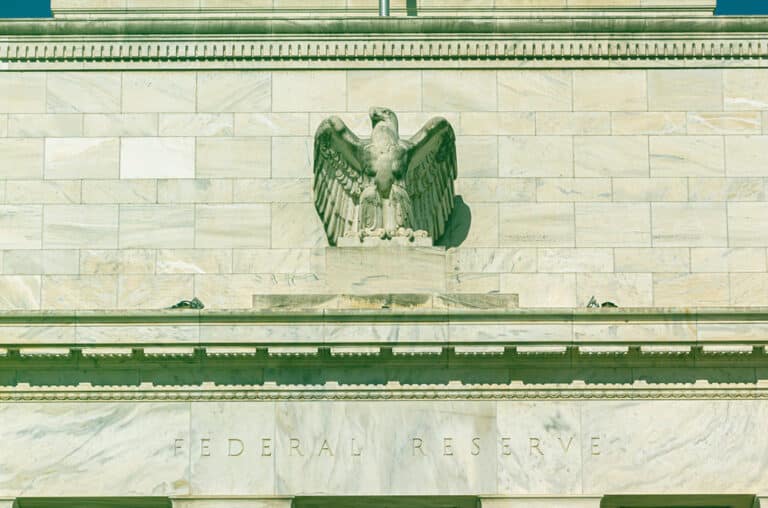
As widely expected, the Federal Open Market Committee (FOMC) left the target range for the federal funds rate unchanged at 3.50–3.75% today. This marks the first meeting without a policy rate adjustment since July 2025. With the January statement characterizing the U.S. economy as “solid” and unemployment as showing “some signs of stabilization,” today’s decision may signal the beginning of a period of steady policy.
After 175 bps of easing so far in the current cutting cycle, Chair Powell emphasized that the Fed is now well positioned to wait for the data, rather than respond pre‑emptively to perceived weakness.
General assessment
Today’s meeting held few surprises. The statement conveyed a more upbeat tone than in December, consistent with ongoing economic resilience. Governors Stephen Miran and Chris Waller dissented in favor of a 25 bp cut—largely in line with their established dovish preferences. Journalists pressed Chair Powell on topics including the DOJ subpoena, Fed independence, and the U.S. dollar, but he avoided engaging on these issues, as expected.
Instead, Powell offered several notable insights:
Economic backdrop: Economic activity this year is off to a very solid start, with strength across multiple fronts. Consumer spending remains strong, the labor market is showing some signs of stability, although hiring activity remains low, and inflation has been trending slightly lower, with much of the overshoot limited to core goods. The tariff-related impact on these categories is expected to fade by mid-year.
Risks: The tension between the Fed’s dual mandate—maximum employment and price stability—has eased. With risks to both sides diminishing, the Committee has more room to pause and assess incoming data before considering further action.
Neutral rate: Chair Powell noted that the current policy stance is roughly within the plausible neutral range, albeit toward the upper end. This suggests little urgency from the Fed for additional near-term rate cuts.
Outlook
The debate around the Fed’s trajectory has eased in recent weeks as economic data have reduced the uncertainty clouding the outlook. Growth remains strong, fiscal policy should add further support, and economic forecasts have been revised higher almost universally. Against this backdrop, there was little rationale for easing today.
Looking ahead, while inflation still warrants some caution, we expect pressures to soften in the second half of the year as tariff effects dissipate. Inflation may not reach the Fed’s 2% target in 2026, but it should make meaningful progress toward it.
With Jerome Powell’s term concluding in May, he is unlikely to preside over another rate-cutting meeting. Nonetheless, as inflation moderates, the path to further policy normalization should reopen. We expect the incoming Fed Chair, whoever that may be, to oversee two additional rate cuts in the second half of the year.