















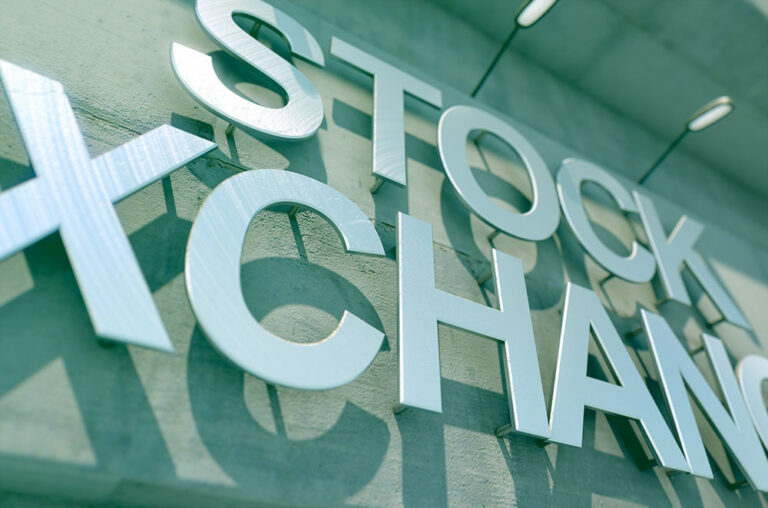
Most Australian Government bonds change hands in the wholesale market, in parcels far beyond the reach of most individual investors. A small but growing segment, however, trades on the ASX like shares. With a new 2057 line due to list on 26 November, this explainer covers how exchange-traded Treasury bonds work, how their prices and yields behave, and what self-directed investors, SMSF trustees and planners should consider before using them.
What exchange-traded government bonds are
The ASX offers two types: Exchange-traded Treasury Bonds (eTBs) and Exchange-traded Treasury Indexed Bonds (eTIBs). According to Moneysmart, the government’s financial guidance service, eTBs pay fixed interest while eTIBs pay interest linked to inflation. Moneysmart also notes that only the Australian Government can issue Treasury bonds. They are issued and managed by the Australian Office of Financial Management (AOFM), which describes itself as Australia’s sovereign debt manager.
The exchange-traded lines give investors economic exposure to the same Commonwealth bonds that institutions buy at AOFM tenders and syndications, but in smaller amounts. The ASX’s monthly bonds report for September 2026 listed 34 government bond lines: 28 fixed-rate Treasury Bonds and six inflation-linked Treasury Indexed Bonds, with maturities from 2027 to 2054. The new 5.50 per cent June 2057 bond, code GSBK57, will become the longest-dated line when it is quoted.
How buying, selling and income work
The ASX says the bonds are bought and sold through a stockbroker, with brokerage payable on each trade. They settle on a T+2 basis and are held in a broker-sponsored CHESS account. ASX-appointed market makers quote bid and offer prices. Prices are quoted per $100 of face value.
Treasury Bonds pay a fixed coupon twice a year, while Treasury Indexed Bonds pay quarterly, according to the ASX’s monthly report. The ASX explains that the coupon rate stays the same for the life of the bond, even as its market price moves. Coupons go to the holder on the record date, which the ASX says is eight calendar days before payment. As with shares going ex-dividend, the price generally adjusts at the start of that period.
At maturity, holders receive the face value (indexed to inflation for eTIBs) plus the final coupon, paid to a nominated bank account. Investors who sell before maturity receive the prevailing market price, which may be more or less than face value.
Price, yield and duration: a worked example
The following example is illustrative only. Suppose an investor buys $10,000 face value of a 10-year Treasury Bond with a 4.5 per cent coupon, priced at $100. They receive $225 every six months ($10,000 × 4.5% ÷ 2). If they hold to maturity, they receive $10,000 back, and their return is the 4.5 per cent yield locked in at purchase.
If market yields rise, the bond’s price falls so that a new buyer earns the higher yield. A useful guide is modified duration. For this bond it is about 8 years, so a 1 percentage point rise in yields would reduce the price by roughly 8 per cent, to about $92 per $100. A long bond is much more sensitive: a 30-year bond with a 5.5 per cent coupon priced at par has a modified duration of about 14.7 years, implying a price fall of almost 15 per cent for the same 1 point rise. The reverse applies when yields fall.
Benefits and risks
The main attractions are credit quality, since the Commonwealth is the issuer, together with transparent pricing and the ability to buy small amounts through an existing share-trading account. Fixed coupons provide predictable income, which can help with cash-flow planning for retirees and SMSFs.
The risks are mainly market and liquidity risks. Prices fluctuate with interest rates, as the example shows. Liquidity varies widely between lines: the ASX measures monthly liquidity as value traded divided by market capitalisation, and in September that ranged from about 94 per cent for the newly listed May 2038 bond (GSBI38) to around 6 per cent for some longer lines. Total turnover in the segment was $162.55 million in September, a small fraction of the wholesale market. Bid-offer spreads and brokerage can take a meaningful share of returns on small trades. The ASX report also notes that the yields it publishes reflect wholesale issuance, so investors should compare the yield implied by the screen price before trading.
Fixed-rate bonds also carry inflation risk: if inflation runs above the yield locked in at purchase, the real value of the income and principal declines. Tax outcomes vary by investor, and the ASX recommends independent tax advice.
Key points
- Exchange-traded Treasury Bonds and Treasury Indexed Bonds let investors buy Commonwealth bonds through a broker, in amounts quoted per $100 of face value.
- eTBs pay fixed semi-annual coupons; eTIBs pay quarterly and are indexed to inflation.
- Holding to maturity returns face value. Selling earlier exposes investors to price changes that grow with duration, which is roughly 8 years for a 10-year bond and almost 15 years for a 30-year bond at current coupons.
- Liquidity, bid-offer spreads and brokerage vary by line and matter most for small or long-dated trades.
This article is general information only and does not take into account your objectives, financial situation or needs. It is not financial advice.
Sources
- ASX – Government bonds, accessed 19 November 2026
- ASX – Bonds Monthly Report, September 2026
- Moneysmart (ASIC) – Bonds, accessed 19 November 2026
- Australian Office of Financial Management, accessed 19 November 2026
- Kalkine Media – Australian Government Treasury Bond 5.50% Maturing 2057 to List on ASX as GSBK57, 19 November 2026