


















From Melanie Baker, Senior Economist at Royal London Asset Management.
From an energy shock to a food price shock?
The rise in energy prices and the closure of the Strait of Hormuz may have stirred the embers of the next inflation spike: one centred on food. As we move into the second half of the year, agricultural input costs, particularly fuel and fertiliser, have also risen sharply. This is happening against a backdrop of more frequent extreme weather linked to climate change, now compounded by the prospect of a strong El Niño. Together, these forces could reinforce each other and push food prices higher.
Fertiliser a key transmission channel
Fertiliser is a critical transmission channel. The cost and availability backdrop has deteriorated since the conflict in the Middle East, increasing the risk of weaker harvests over the coming year. Higher fertiliser costs can make application uneconomic for some farms, reducing crop yields. Urea, the most widely available nitrogen fertiliser, was up more than 65% by mid-May from end-February levels, while EU nitrogen fertiliser prices were 40% above December levels. In the UK, farmers were reportedly considering planting less next season as costs rise. Multiplied across regions, those decisions could mean smaller harvests and higher food prices, with the burden likely to fall hardest on vulnerable households and lower-income economies.
What is El Niño and will we get one?
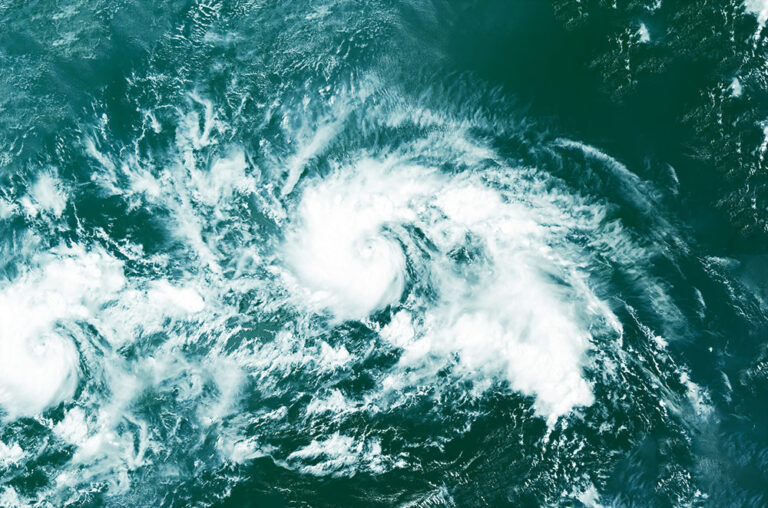
El Niño is a powerful climate pattern that typically occurs every two to seven years; the last was in 2023/24. The US National Oceanic and Atmospheric Administration has declared El Niño conditions are underway again, with an 81% chance of a “very strong” event during October-December 2026. Strong El Niño events make extreme heat, heavy rainfall and colder winters more likely in different parts of the world, with the Americas, Asia and Australasia often most exposed. This time, the effects are likely to interact with climate change, a structural pressure, and with already elevated energy and food input costs.
What do El Niño and extreme weather events mean for prices?
Weather shocks do not feed through to agricultural prices immediately: planting and harvest cycles create lags, and effects vary by crop and region. But there is clear evidence that El Niño can lift food prices. In a 2023 Economic Bulletin article, the ECB cited analysis suggesting El Niño episodes can raise global non-energy commodity prices by around 5% for six to 16 months, with soybeans, corn and rice among the most affected.
The impact can also spread beyond food. Extreme heat and drought can disrupt transport routes through low river and canal levels, reduce productivity through poor working conditions and illness, and hit electricity production by lowering hydro output. In other words, the price effects may not stop at the supermarket shelf.
What about economic growth – who will be hit the worst?
El Niño is not automatically bad for growth everywhere. The effects are complex: heavier rainfall can help some regions and crops. IMF research has found evidence of positive effects in the US, but short-lived negative effects in economies such as Australia and Japan.
But this event will not arrive in isolation. It follows an energy price shock, higher agricultural input costs, reduced fertiliser availability and a climate backdrop already producing more frequent extremes. Farmers, food producers and retailers may already have seen margins squeezed. Shielding consumers from further price rises may therefore be harder. The growth hit could be more damaging if weaker consumer spending power and supply disruption compound each other.
Higher food prices could also become a broader macro and stability issue, particularly in emerging markets where food inflation has more direct social and fiscal consequences. Reduced policy flexibility is one risk. A more positive possibility is that higher food prices accelerate investment in climate adaptation, including water infrastructure and irrigation.
What does all this mean for central banks?
We think there is a good chance this year’s energy price shock is followed by a jump in food prices, driven by higher input costs, the climate backdrop and the probability of a strong El Niño. Like an oil shock, a food price shock creates a dilemma for central banks: it raises inflation while also hurting parts of the real economy, especially consumers.
Given recent inflation history, any food price spike may have a more persistent effect than it would have done a decade ago. That makes it harder for central banks simply to ‘look through’ the shock. Food inflation could therefore become one more reason for rates to stay above neutral for longer.