


















It is difficult to interview someone in Europe, but after a couple of false starts, I was very pleased to interview Jetro Siekkinen, Partner and Head of Emerging Market Fixed Income at LGT Capital Partners. Siekkinen is based in Switzerland and has been investing in emerging markets for more than 30 years.
LGT Capital Partners principally invests for institutional investors, including family offices, and thinks very long term.
Elizabeth Moran – What does it take to be classified as an emerging market economy?
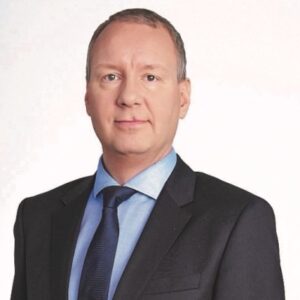
Jetro Siekkinen – You could have started with an easier question, because my usual answer is that if the IMF can’t distinguish between developed, developing and low-income countries, then it’s difficult. Even though we are very much not a benchmark-orientated investor, we still look at how JP Morgan, the usual industrial standard, classifies emerging countries.
For us for example, South Korea is not really an emerging market anymore. We still might tactically have a view or position on that country but it’s not strategic. It’s very difficult to split emerging from developed markets when you look at the country fundamentals, especially nowadays.
Developed countries, which should have high standards, good fundamentals and strong institutions, in our view are actually weakening and thus going in the wrong direction. Then on the emerging and the frontier end, we are seeing a lot of positive improvements from a fundamental perspective, so we believe these countries are actually on an improving path.
So, it’s kind of a mixture, but we can roughly say that we exclude the big G7 countries, the US, Canada, the whole of Europe and Japan from emerging markets, and then there are borderline countries like Hong Kong and Singapore. We don’t invest in these countries even on a tactical basis, even though they are not classified as developed countries.
So that’s a short answer to start.
EM – You were saying in your response then that there are improving emerging market economies can you perhaps describe some of the components of the subsector?
We split the emerging market sub sectors into two parts:
- Hard currency where the instruments are U.S. dollars or other developed currencies
- Local currency, where local currency fluctuations matter more
That’s the big split because hard currency and local currency also have different return drivers.
Hard currency has the total risk-free rate of US Treasuries. Alternatively, it could be denominated in European papers, such as those issued by Germany, so German yields would be the risk-free weight. Then you have the risk premium above it, depending on the country risk.
On the local currency side, there’s obviously the local yields and the local fixed income market. Your maturity will determine whether the money market or the longer-term government paper should be used as references. Then you have the currency risk depending on your base currency, which is also very important when we look at the local currency. It’s a totally different thing to look at the local currency depending on if you are European based or US based or Australian clients. You have to look at it from different perspectives but just be interested in this currency component. It obviously has a different behaviour depending on the base currency and its usual drivers in that case.
In terms of local currency, we still divide it into two different buckets, so we have emerging market local currency which contains more traditional economies such as Brazil, Mexico, South Africa and Indonesia, and then we have frontier local currency.
That is how we divide the world. Emerging markets span roughly 30 countries which are more development, and then we have 140 countries in the frontier space which are less developed. These are countries like Uganda, Kenya, Uzbekistan, Nigeria, Mongolia and Kazakhstan. Some of them are now reaching towards being classified as emerging in future. As already mentioned, classifying between emerging and frontier is extremely difficult.
We have our own classification. It’s for borderline cases like Uruguay for example. We still keep it as frontier. As it’s fairly small, it still has an open economy which has a lot of influence from external drivers. Some people might say that it’s more emerging.
These are the three different sub asset classes that we look at within local currency, and then there is hard currency. It is the same split between the more developed emerging markets and the frontier markets. We have a global specialty in the frontier local currency space and are one of the few asset managers focusing on that market. Our team has been doing it for 20 plus years, including time at a predecessor firm before we joined LGT Capital Partners in 2021.
EM – What countries do you currently find attractive?
I would say from a fundamental perspective, countries like Nigeria, Uzbekistan, and Kazakhstan currently have improving fundamentals. Brazil is also an extremely interesting story after the surprising election win by Lula for a fourth term. We like to see a long-term positive development path, which is usually driven by reforms on the local horizon. Reforms that are improving the fundamental framework of the country, which then gives us the confidence to invest. Our team follows an extremely long-term investment style and philosophy, as our company and the owner. The Princely Family of Liechtenstein always says that they invest for the generations, not for days or months. This is exactly the same for us; we look over the cycles.
Different markets are driven by different things. Is emerging market local currency usually driven by global drivers such as US Treasury yields, or is it the US dollar or equity market sentiment? In our experience, frontier local currency is still very much driven by country specific drivers. They have not been really linked to global drivers. Local currency development is much more important. Is it driven by growth, is it inflation, is it the monetary policy or fiscal policy or is it the political developments? It’s very country specific.
If we look at the frontier local currency space, we always use the example of the three ‘Us’. Uruguay, Uganda, and Uzbekistan have only one thing in common. They start with the same letter. The drivers are totally different. We had higher uncertainty in Uganda, in October, but it had zero impact on Uruguay or Uzbekistan. So, the drivers are different for hard currency where it’s very much U.S. Treasury yields and global drivers. For the emerging market local currency markets such as Mexico and Brazil, it is also global because one of the key points is that foreign ownership is high. If we look at Mexican peso government bonds. they are owned 50 to 60% by foreign investors. If we look at Mexican US dollar bonds, foreign ownership accounts for 80% plus.
Foreign investors own between 5 and 7% of Ugandan local currency government debt, so locals are dominating these markets. When global uncertainty increases ,for example because of Liberation Day or another event involving the US, an Ugandan pension fund will not start selling local assets. Instead, it sells external assets, such as US Treasuries or the NASDAQ, and they repatriate money back home, as this is their safe haven without any currency risk.
Local pension funds may invest in money markets, government funds, equities, real estate or infrastructure to support the local market. When the Iran war started in March, the Armenian dram strengthened even though Armenia is an energy importer because foreigners only own roughly 2 to 3% of the local currency government debt.
EM- While we are talking about hard currency and local currency, do you invest in both and is it mainly government bonds?
We focus and have always focused on sovereign risk, so we only invest in government debt. Within the local currency space, we also partly invest in AAA-rated development banks, such as the World Bank, the African Development Bank or the Asian Development Bank. Our team has never made any corporate investments in emerging markets.
EM – What changes have you witnessed in the last few years?
That’s a big question. From a hard currency perspective, we have seen quite a few restructurings over the last five plus years. These processes take much longer than they used to because they are more complicated. Years ago, there would be just public debt, but nowadays, there’s also bilateral debt. For example, Zambia’s restructuring process took 3 1/2 years, so it started in December 2020 and was finalised in the summer of 2024. It was delayed because China was involved as a bilateral funder.
The IMF is more active globally. They often have some requirements that might involve devaluation of the currency or other financial market reforms. While this lengthens the process, in our view, the IMF’s involvement as a watchdog before and after the restructuring tends to also improve it.
Another development is that, from an investor’s perspective, whereas most investors were in hard currency 10 to 20 years ago, nowadays more are moving into local currency. That’s more beneficial for the country itself because there is less risk for the issuing country than if it had issued in a hard currency. I’m not saying that it’s safer, just that there are fewer external drivers and pressure points involved.
EM – Isn’t that one way to differentiate between frontier and emerging market?
Frontier countries quite often have more focus on the local currency. Countries like Nigeria and Egypt have a very developed hard currency curve because they prefer it. When we talk with countries with more dollar debt than local currency debt, they usually indicate that the future trend for them is towards local currency.
To give an example, there was some turmoil in Paraguay over the last few weeks because of one local bank going into a resolution. They have also been more dependent on dollar funding than on their local currency. Over the last few years, they have indicated that they have 20% in local currency but they want to increase the proportion of local currency versus hard currency to 40% or even higher.
So, these countries prefer local currency because they are smaller and more vulnerable to global drivers. Obviously, they want to be less impacted by global developments. Usually when a country starts to issue debt, it issues in local currency debt at the short end of the curve. If they want to diversify, they might go to a hard currency or issue longer-term debt in their local currency and then maybe issue hard currency afterwards. We have a good example with Uganda, as they have openly stated that they will not issue hard currency in a public format. Any hard currency funding would come from international finance or institutions like the World Bank of the IMF.
EM – Can you talk a little bit about the in hard currency? How do you counsel your investors. I guess they accept very long horizons and a certain amount of volatility?
The highest volatility is in in the hard currency and then in emerging market local currency because the currency component is the main driver for volatility.
Investors often think that the frontier local currency market is the riskiest, but it has comparatively been less risky from a volatility perspective, because of the global drivers for hard currency. In hard currency, it’s US Treasury rates, and then there are country-specific drivers which add to the volatility risk premium.
In the local currency space, the currency dominates, and there might also be some swings, as we saw after the Brazil election results. Lula unexpectedly beat Bolsonaro and we saw quite big moves in the local currency yields, as investors did not anticipate sufficient fiscal policy tightening during the next term.
So that’s kind of how volatility works. Investors want to diversify their portfolio, so they want to have different types of drivers in the portfolio. So, you don’t really want to be exposed to hard currency because you know that there will be exposure to US Treasuries and the country specific risk premiums. You also don’t want to be exposed only to currency risk. The currency risk is also very much dependent on your own base currency. If we look at US dollars, euros or Australian dollars, it is totally different.
The next question from the investor base is, ‘should I hedge my base currency versus my own home currency?’ It usually comes down to the cost of hedging. I’ll give you an example. If you are Brazilian with a 14% local yield and you are investing in emerging market local currency and you want to hedge the Brazilian real against the US dollar, you may earn roughly 10% hedging, but if you are Swiss and invest in emerging market local currency and I want to hedge against the Swiss franc, you need to pay 4% per annum. The cost difference is significant. The conversation then turns to whether or not to hedge, and what the volatility environment is for your investment.
EM – Thinking about your client base, your clients come to you to invest in emerging markets and this very broad opportunity range. Are they bigger institutional, family offices and super fund clients? I’m assuming they need to be to have a very long view? If you’re an Australian institution, why would you say to them that that they should invest in emerging markets and through you?
I’ll start with the last question first. Our team is specialised in emerging and frontier market debt and I’ve personally been investing in this space for 30 years. We have the experience, knowledge and understanding of the market. We also have an extremely long track record and are investing from a similar perspective as our institutional and family office clients.
LGT Capital Partners is a principal investor: the Princely Family of Liechtenstein, our owner, and the LGT Endowment are also invested in our strategies.
If you are institutional investor, you’re looking for diversification because you have a long-term liability that you have to cover, so you need a strategic asset allocation framework, and then you are filling the gaps.
If you do not have an emerging market allocation in your portfolio, you may be missing exposure to roughly 90% of the world’s countries. That 90% has the highest portion of the population and if you look at the 30 strongest growing countries, they are all either frontier or a few emerging market countries.
Developed country’s fundamentals are declining when emerging market countries are improving. If you want to be involved in a market that is developing positively, you may want to consider emerging markets.
I’m not saying that every single country will perform. That’s why it might be beneficial to rely on an active manager who is picking the right countries to invest.
When we talk with the sovereign wealth funds or family offices, they usually have absolute return targets. They don’t have a benchmark or intended approach they might have a strategic asset allocation but it’s still more focused on returns on the longer horizon and absolute returns, so they need to try to find the something that suits them. Our sovereign wealth fund and family office clients look at mostly local currency which has historically offered higher return with comparatively lower volatility, although returns are going to depend on your target and your framework.
Generally, institutions are investing more broadly rather than looking at absolute returns, and they tend to consider frontier local currency.