



















Key messages:
- This week’s data will test how much more the long end can absorb. Core PCE and payrolls will be particularly important, although we see relatively benign prints as not adding to the hawkish narrative.
- The extension of still sticky inflation and steady employment would keep pressure on yields, but unlikely to trigger another upbeat growth-led or inflation-fueled leg of the selloff.
- Markets have cleared 5% intact, though the speed of the climb has raised the stakes. We remain patient on duration awaiting inflation clarity and stay selective on credit.
How quickly yields got here matters more, and the first signs of strain are showing up at the weaker end of credit.
For most of the summer, 5% on the 10-year U.S. Treasury yield was treated as the line markets could not cross without something breaking. The 10-year now sits at 5.2% and risk assets are still standing, suggesting the level alone was never the real threat1.
September showed just how differently equity and bond markets react to a resilient economy, with the former pricing its benefits while bonds capture its costs. While trimming our underweight, we are staying cautious on duration until the inflation picture improves and see volatility as a chance to add quality credit and floating-rate income at better entry points.
Too fast, too furious?
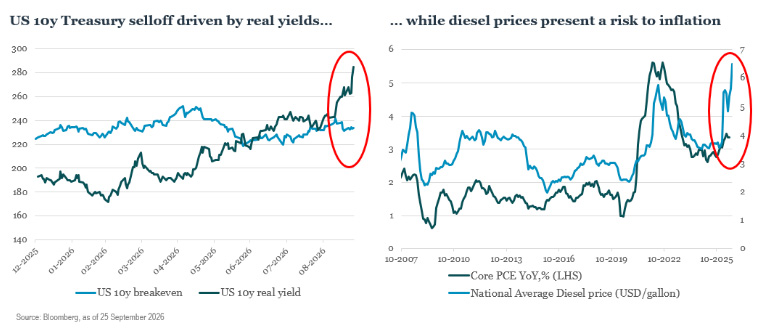
Last week delivered another leg higher in yields, with the 10-year pushing through 5% as Treasuries sold off across the curve. A gauge of implied rates volatility jumped to its highest level since March2.
Firm U.S. growth data and Brent crude above $100 a barrel have made Fed expectations more hawkish, adding to structural pressure from fiscal deficits and heavy Treasury supply, alongside a wave of AI-related bond issuance competing for capital. Higher real rates have driven much of the selloff, with weak Treasury auctions compounding the strain3. Yet the strong growth backdrop, powered in part by AI investment, has also kept risk assets steady.
Markets can make their peace with a yield above 5% if it arrives slowly. Investors get time to rebalance, and companies and equity valuations can adjust to a higher cost of money at their own pace.
A fast repricing is a different animal. Bondholders are left nursing mark-to-market losses, and some are forced to cut positions or reduce leverage at the worst moment, tightening financial conditions in the process. With near-term inflation risks still tilted higher as energy prices remain elevated, the long end has little protection against another bout of turbulence, even after this latest reset.
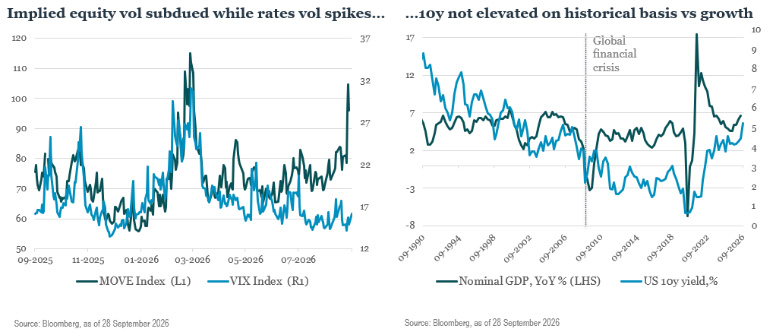
So why are equities shrugging while bond markets shout?
Equity volatility has stayed remarkably calm through the bond rout, with the VIX remaining at historical lows even as rates volatility jumped. Solid earnings momentum has given stocks enough cushion to absorb higher yields so far.
The bigger risk for equities is a change in what is driving yields higher. Stocks can live with yields rising on strong growth expectations because robust earnings provide an offset to the higher discount rate. There is much less of an offset when inflation or a higher term premium is doing the work. For now, earnings are winning the argument, and we remain constructive on risk. Third-quarter reporting season will show whether that can last.
Credit is the bridge
Until recently, credit had shrugged off the rates selloff. All-in yields were high enough to attract buyers, and healthy balance sheets kept default fears and spreads contained. Last week brought an incremental shift, with high yield bearing the brunt of the repricing.
U.S. high yield spreads widened ~27bp, underperforming investment grade to extend an emerging theme, with the pressures more pronounced further down the quality spectrum4. This still looks more like repricing than distress. Money is flowing into the asset class, and the market is digesting heavy issuance without much trouble.
The risk is what happens if spreads keep widening while Treasury yields stay high. Borrowers would then pay more on both the risk-free rate and the credit premium, and companies refinancing debt raised in cheaper times would feel it first.
Volatility rewards selectivity
With yields at multi-year highs, investors are being paid to wait. The volatility is also creating more opportunities to be selective across duration and credit.
- Not yet buying the dip: We have trimmed our underweight to U.S. duration as valuations have improved, but we still see upside risk to long-end yields. If higher diesel prices feed into core inflation, that risk grows, while structural forces keep a floor on yields, in our view.
- Quality and carry: In credit, we would rather earn carry in higher-quality names than reach down the rating spectrum for extra yield. Rising refinancing costs make issuer selection in high yield more important, while rate-driven dislocations in securitized credit are opening up better entry points.
- Senior loans are selectively sweet: Floating-rate senior loans pay a healthy income without adding duration, with the broadly syndicated loan market yielding above 9%5. Their favorable spot in the capital structure also provides protection. Higher-for-longer rates cut both ways, however. Lenders collect more income, while slipping interest coverage among lower-quality issuers makes picking the right names more important than usual.
- EM offers diversification: Several of the fiscal and inflation worries once reserved for emerging markets have moved to developed markets. Many EM central banks went into this period with higher real rates and more orthodox policy, and deeper local investor bases have added resilience. With local market inflows still positive, selective EM debt offers income plus some diversification away from developed market sovereign risk6.
The week ahead
This week’s data will test how much more the long end can absorb. Core PCE and payrolls will be particularly important, although we see relatively benign prints as not adding to the hawkish narrative. The extension of still sticky inflation and steady employment would keep pressure on yields, but unlikely to trigger another upbeat growth-led or inflation-fueled leg of the selloff.
Markets have cleared 5% intact, though the speed of the climb has raised the stakes. We remain patient on duration awaiting inflation clarity and stay selective on credit. The income is back, and this autumn’s volatility is creating opportunities to put it to work.
Sources: 1-7 Bloomberg, as of 28 September 2026