



















VanEck Senior Portfolio Manager, Cameron McCormack says that “The great income drought may be over, and bonds are back in the fight for investor capital.
“Australian 10-year yields have risen to around 5.2 per cent, a level last observed in 2011,” McCormack said.
“The surge comes on the back of homegrown inflation pressures as well as a slew of structural and idiosyncratic global risks. July trimmed mean inflation and Q2 GDP both came in above consensus expectations, prompting markets to price a 70 per cent probability of an increase at the RBA’s next meeting in September. Given this, we are of the view that there will have to be at least one more RBA hike this year to temper inflation, with a strong possibility of a September hike.
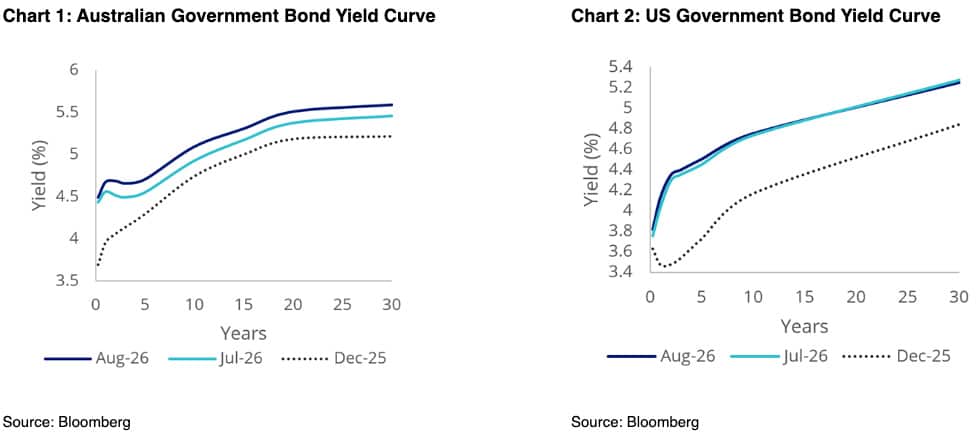
“For investors, the key question is how best to capitalise on the opportunities created by this significant repricing in interest rates. There are three plausible outcomes. Persistent inflation and rising offshore term premia could push yields higher from current levels. Alternatively, yields could instead remain around current levels if inflation stays firm, but growth softens enough to limit further tightening. In contrast, a sharper slowdown would create scope for inflation to ease and yields to fall more materially.
“Each scenario favours a different approach to portfolio positioning.
“The first scenario is that bond yields rise higher from here. In this scenario investors would be more sensitive to rising yields than focused on locking in income and a floating-rate income strategy could help insulate portfolios from rising rates.
“The second scenario is that bond yields remain elevated. For investors with this view, the opportunity is to lock in attractive yields while retaining upside if rates eventually fall. This approach favours the belly of the curve, where investors can capture attractive income and still benefit from a decline in yields without taking the larger price swings associated with longer-dated bonds.
“The third scenario assumes inflation moderates faster than expected or growth weakens, prompting the RBA to move toward an easing cycle. In this environment, long-dated government bond yields would typically fall, and the returns would be driven primarily by movements in the yield curve, with minimal credit risk relative to corporate bonds.
“Fixed income can reward investors across several outcomes. Floating-rate assets benefit if rates stay high, longer-duration bonds may gain if rates fall, and select credit offers extra yield in between. Markets move before central banks do. Waiting risks surrendering today’s income and tomorrow’s potential capital gains.”