



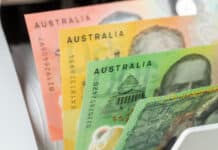











Alphabet, owner of Google and one of the mega AI issuers, has launched an Australian dollar bond issue. It is anticipated to raise up to $5 billion in what is expected to be the country’s largest corporate debt transaction.
It is a senior unsecured three-year Kangaroo with six tranches:
• A three-year fixed with price guidance of 75 basis points over a semi-quarterly swap or indicative coupon of 5.35%
• A three-year floating rate note with price guidance of 75 basis points over 3-month BBSW
• A five-year fixed with price guidance of 100 basis points over semi-quarterly swap or indicative coupon of 5.65%
• A five-year floating rate note with price guidance of 100 basis points over 3-month BBSW
• A 10-year fixed with price guidance of 145 basis points over semi-quarterly swap or indicative coupon of 6.40%
• A 20-year fixed with price guidance of 195 basis points over semi-quarterly swap or indicative coupon of 7.10%.
The funds will be used to fund its extensive data centre rollout.
The joint managers for the sale are ANZ, Deutsche Bank, RBC Capital Markets, and TD Securities.
Mark Bayley from bond investor Kapstream has said of Alphabet’s Australian bond offer: “It’s probably the equivalent of the SpaceX IPO for the corporate bond market.”
Nasdaq Chief Economist Phil Mackintosh, speaking during a Betashares webinar this week, said investment in data centres, chips and electricity generation was filling the gap left by slowing consumer spending, while supporting growth across the world’s largest economy.
Mackintosh told Betashares that the world’s largest technology companies spent around US$500 billion on capital expenditure last year, with that figure expected to approach US$1 trillion within the next few years as they race to build AI capacity.
“It is a historic moment for the Australian corporate bond market,” said Chamath De Silva, head of fixed income at Betashares in the AFR.
“Not only is it Alphabet’s first-ever Australian dollar bond, it’s also the first AI hyperscaler to access the Australian dollar market and the first US large-cap technology company to issue a Kangaroo bond in almost a decade.”