

















The US Treasury had to pay 5 per cent to sell new 10-year notes on Tuesday, as an auction held hours after a hotter-than-expected inflation report drew softer demand, particularly from the category of bidders that includes foreign investors.
The Treasury sold US$42 billion of 10-year notes at a high yield of 5.020 per cent, with the coupon set at 5 per cent, according to auction results reported by Merger Monday and data service Helious. BigGo Finance reported that the coupon was the highest on a new 10-year note since 2006.
Weaker demand metrics
The bid-to-cover ratio, which compares total bids with the amount on offer, fell to 2.46 from 2.77 at October’s sale, the lowest for a 10-year auction since May, Merger Monday reported. Helious put the recent average at 2.60.
The notes priced about 1 basis point above their yield in when-issued trading before the bidding deadline, a so-called tail that indicates buyers required a modest concession to absorb the supply, according to both sources.
The allocation also shifted. Indirect bidders, a category that includes foreign central banks and investors bidding through intermediaries, took 61.2 per cent, down from 80.3 per cent in October, according to BigGo Finance. Merger Monday said that was the smallest indirect share at a nominal 10-year auction since at least October 2025. Direct bidders, typically domestic money managers, took 29.0 per cent, while primary dealers, who are required to bid and absorb unsold supply, were left with 9.8 per cent, up from 2.5 per cent at the prior auction.
Inflation shock
The sale followed October consumer price data showing prices rose 0.4 per cent over the month and core prices 0.3 per cent, both above forecasts. Two-year yields jumped around 17 to 18 basis points on the day, according to Merger Monday and Reuters, as traders priced in further Federal Reserve tightening.
The Fed held its target range at 3.75 to 4 per cent in October and next meets on 8–9 December. Goldman Sachs chief US economist David Mericle wrote that “we continue to expect a second 25bp rate hike in December”, Reuters reported.
The 10-year auction was the second of three coupon sales this week. Merger Monday reported that Monday’s US$58 billion three-year sale also drew soft demand, with US$25 billion of 30-year bonds scheduled for Thursday.
Spillover to Australia
The selling extended into Asian trading on Wednesday. Reuters reported that the US 10-year yield held near 5 per cent in Asia, while Japan’s 10-year yield rose 7 basis points to 2.755 per cent and Australia’s 10-year yield climbed 6 basis points to 5.05 per cent.
For Australian investors, the auction underlines how closely local long-end yields remain tied to US supply and demand dynamics, even as domestic data point to a slowing economy and markets debate whether the Reserve Bank of Australia has finished raising rates. With the Australian and US 10-year yields now trading at similar levels, offshore demand for Treasuries is a key variable for local duration.
The softer bid also feeds into corporate borrowing costs. Higher government yields set the base rate for credit pricing, and Fox Corporation sold US$8.4 billion of investment-grade bonds the same afternoon, with its new 10-year notes yielding about 6.4 per cent, according to the company’s pricing term sheet.
What to watch
The 30-year bond sale on Thursday will test whether long-end demand stabilises after the inflation surprise. Weak demand at long-end auctions can add to the term premium, the extra yield investors demand for holding longer-dated debt, while a solid result could ease pressure on global benchmarks heading into the Fed’s December meeting.
Sources
- Merger Monday (via HERE Rock Hill) – Treasury Pays 5% to Sell $42 Billion of 10-Year Notes, 11 November 2026
- Helious – 10-Year Treasury Note Auction Results (CUSIP 91282CRX1), 10 November 2026
- BigGo Finance – US 10-Year Treasury Coupon Returns to 5% as Auction Demand Cools, Bid-to-Cover Falls to 2.46, 10 November 2026
- Reuters (via Investing.com) – Bonds reel as hot inflation fuels jumbo Fed hike fears, 11 November 2026
- Fox Corporation – Pricing term sheet (Form FWP), 10 November 2026
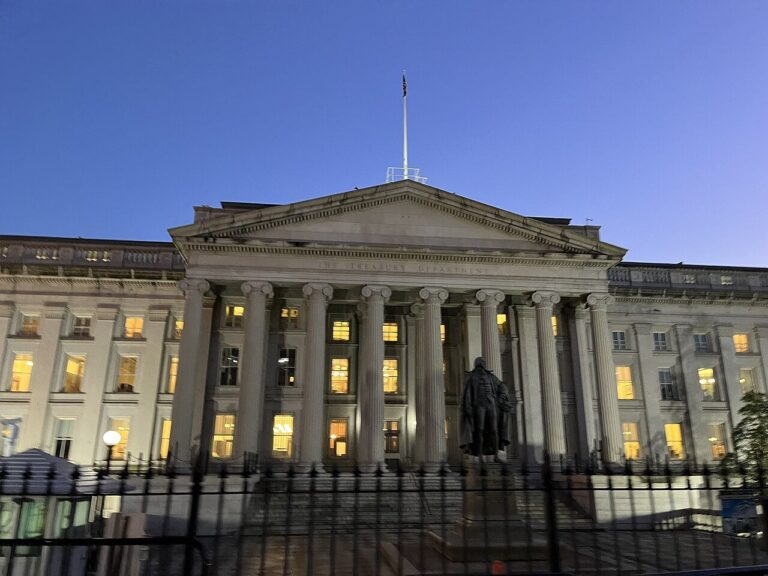
Image: Wisneyykarin, Wikimedia Commons, CC BY-SA 4.0.