


















The fight against inflation is not over. Last week we saw the RBA Monetary Policy Board increase the cash rate to 4.85%. While the Bank of England also increased rates to 4%, its first hike in more than three years.
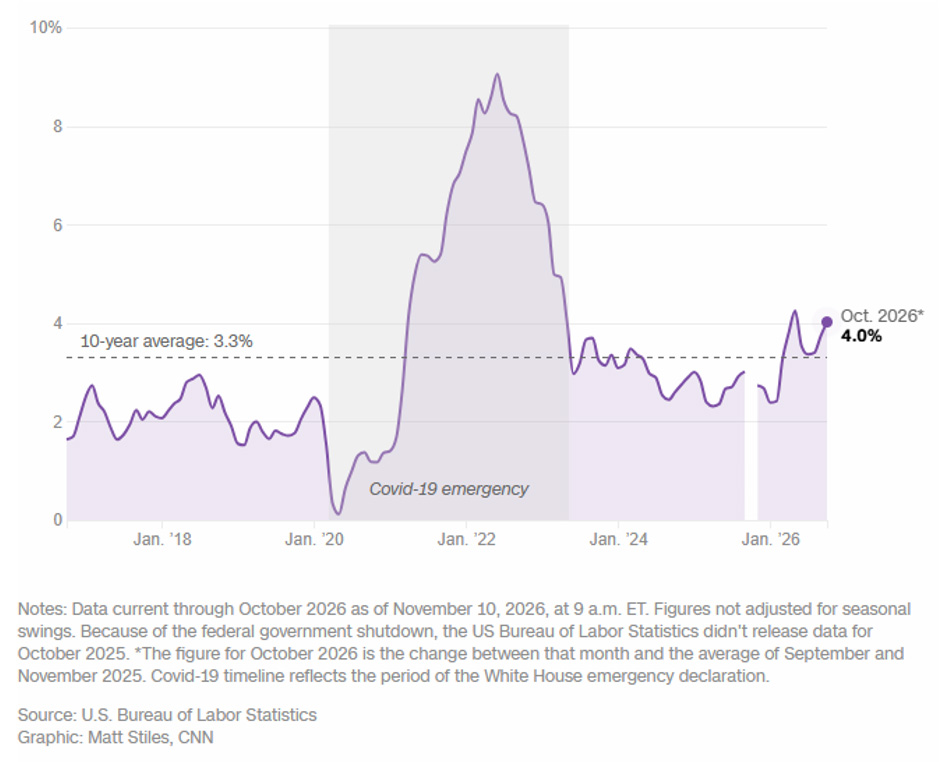
There’s greater pressure on the US Fed to hike at its next meeting after higher-than-expected inflation data showed US consumer prices rose 0.4% in October compared to a month earlier, higher than the 0.3% forecast. While data is not available for direct comparison over a year ago, the US Consumer Price Index is estimated to be 4%.
Most commentators expect a rate hike in December. We present three views below:
The October CPI report came in hotter than anticipated across both headline and core measures. Headline CPI rose 0.4% during the month, with price pressures broadening beyond energy across a wider range of goods and services. Meanwhile, the 0.3% increase in core CPI underscores the stickiness of underlying inflation. Together, these figures reinforce the case for further policy tightening—we continue to expect a 25 bp rate hike in December, followed by another 25 bp increase in March 2027. – Magdalena Ocampo, Principal Asset Management
With the exception of housing, the relative increase in market interest rates this year has yet to derail significant portions of the economy. And the labor market remains stable, if not showing signs of improvement, as non-farm payroll growth extends beyond the estimated breakeven rate of about 100k while the ‘quit’ rate also ticks higher. With that backdrop, we continue to expect the Fed to hike rates by 100 bps with the next increase coming in December and quarterly thereafter… We increased our recession probability from a very low level to historical norms of about 25%. – PGIM Credit
Friday’s October payrolls (165,000 jobs added versus a 65,000 consensus) cemented December hike expectations and pushed 2-year Treasury yields up as much as 9 basis points to 4.55%. So what does this mean? Higher for longer is now the base case, and tightening is broadening just as US labor markets stay resilient. Duration risk remains elevated, and portfolios with short-duration positioning and floating-rate exposure are likely to be better insulated… – Benoit Anne, MFS Investment Management
The RBA raised the domestic cash rate last week to 4.85%. Haran Karunakaran, from Capital Group says not to try and time the bond market, long term investors have the opportunity to lock in attractive yields today.
Marc Zahr from Blue Owl, an alternative asset manager, considers real asset income through the eyes of a bond investor. This is a unique and insightful note that compares characteristics and gets us thinking about what investors are relying upon for payment.
Growing AI debt issuance has been pushing up yields and taking bigger slices of various indices. Adam Whiteley from BNY Investments says investors need to think through allocations and that high yield is an unlikely source of diversification.
Arif Husain from T. Rowe Price has been forecasting higher interest rates for years and doesn’t think they have peaked. Husain explains some of the recent swings in US 10-year Treasury yields and why he doesn’t think yields will have peaked until there is a recession.
Still in the US, MFS Investment Management takes a look at sector implications under a Democrat-led Congress.
The Alternative Investment Management Association (AIMA) and its private credit affiliate, the Alternative Credit Council (ACC), have published a new guidance for Australian private credit managers.
Finally, Royal Bank of Canada has acquired Yarra Capital Management.
Hope you’re having a great week!