















Australian asset consultancy Atchison says investors relying on resources alone to hedge inflation are making a concentrated bet on Chinese demand. A spread across three assets, it says, holds up far better than any one of them.
The starting point is a shift most investors have missed. For the first time in the better part of a decade, short-dated Australian government bonds are paying a positive real yield, with the 10-year near 5.0 per cent against headline inflation of 3.8 per cent.
Investors are now paid a real income to wait, rather than having to choose between bonds that lose ground to inflation and commodities that only reward them if prices keep climbing.
Atchison Investment Analyst Mishan Dahia says, “Everyone’s reached for resources as the inflation hedge this year, and the mechanism genuinely works.
“When a miner’s costs are largely fixed, most of a price rise drops straight to the bottom line. That’s how materials put on around 47 per cent in FY26. My issue is what it’s leaning on, the whole trade needs Chinese demand to hold up, and right now the market plainly doesn’t believe it will.
“Look at China’s 10-year yield, as it’s fallen to about 1.75 per cent, from close to 2.8 a year ago, and Bond markets don’t price yields down there when they’re expecting a recovery.
“The maths cuts both ways, Liontown fell 44 per cent in July when lithium turned, and the same sums that look wonderful on the way up hurt just as badly on the way down.”
Also read: Inflation, Growth and Fiscal Risks Will Drive Fixed Income Markets
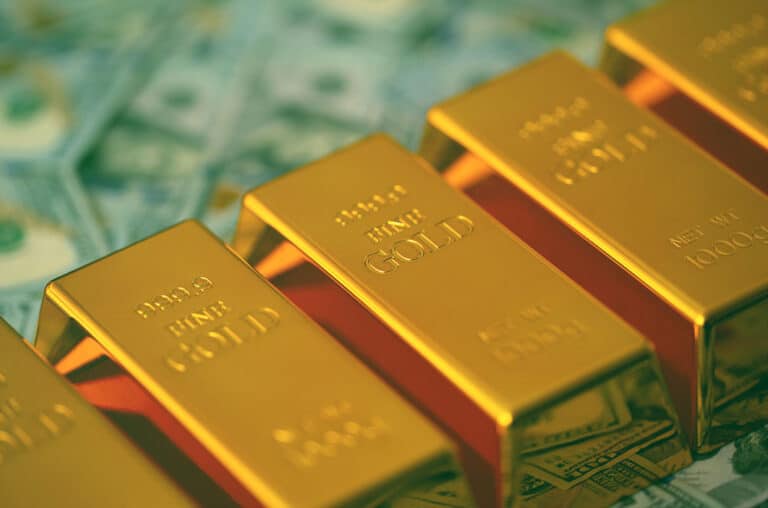
Atchison instead favours a disciplined barbell across three hedges, each doing a job the others cannot. Short-dated government bonds supply real income while investors wait, and gain if rates fall. Gold offers protection when other assets break, and exposure to a steady move away from the US dollar.
It has climbed from about US$2,900 an ounce in 2022 to near US$4,400 today, bought not by speculators but by central banks, with Poland, Turkey and the Gulf states among the persistent buyers. Select resource companies keep the earnings upside that sustained inflation rewards.
Dahia added, “The part people forget is knowing when to step back. If oil rolls over because the Middle East calms down, you trim the energy exposure. If China’s numbers keep sliding, you lean harder on real yield and gold. We’re not trying to pick the one winner. We’re trying to build something that doesn’t fall apart if we turn out to be wrong on any single piece.”
With much of the current inflation impulse running through oil, which spiked on Middle East tension and could reverse just as quickly, Atchison says a single-asset hedge leaves a portfolio exposed to a sharp turn, while a three-leg structure is built to hold up over a five-to-seven-year horizon.